
Football

Established in 1879, Fulham Football Club is the oldest professional football club in London, with a rich and extensive history in English football. The club, based in West London, has experienced both triumphs and challenges over its 140-year history. Fulham’s journey is similar to a rollercoaster, with many historic moments, legendary players, and unforgettable matches.
The early years of the club saw them grow from a local team into a giant in the English Football League and became an important part in the West London football scene. Their home ground, Craven Cottage, has been its stadium since 1896 and it’s a fortress for the club and its matches. There, the club created rivalries, particularly with Queens Park Rangers and Chelsea, making their games a beautiful show for London football fans.
Over the years, Fulham FC conquered the hearts of passionate fans, with heart-stopping games, and a commitment to play football with love and hope. From initial championships, such as the West London Amateur Cup and Southern League, where the club played league game, some important players appear, like Johnny Haynes, Louis Saha and Clint Dempsey.
In this article, I’ll show you the complete history of this club from London, showing its beginning, important players and moments, legendary managers, iconic matches and a crucial role to the evolution of London football and the Premier League!
Early Years of Fulham Football Club (1879-1900)
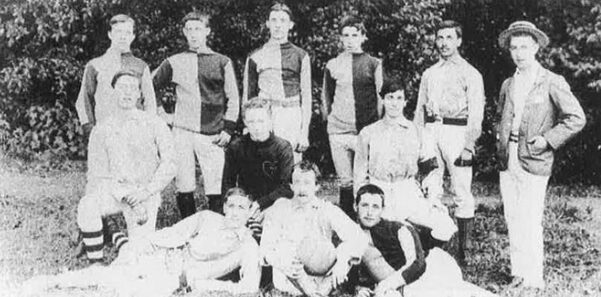
Fulham FC was founded in 1879, making the club one of the oldest football clubs in London, and almost the oldest in the world. The club was established by a group of local men in the city who were passionate about a new sport that was emerging: football. These men wanted to create a team that could compete with other emerging football clubs at that time. So, Fulham St Andrew’s Church Sunday School FC was created.
Fulham’s early years were spent competing in local leagues and tournaments, which allowed them to gain experience and recognition in London’s amateur football scene. This period was crucial in establishing the club’s presence and building its foundation for future success.
In the first years, the club had a nomadic existence, with Fulham playing its games on multiple grounds in the region, such as Captain James Field. However, in 1896 was a turning point, and the club moved to Craven Cottage, its current stadium until today, and a ground that became synonymous with the identity of the club.
West London Amateur Cup and London Challenge Cup
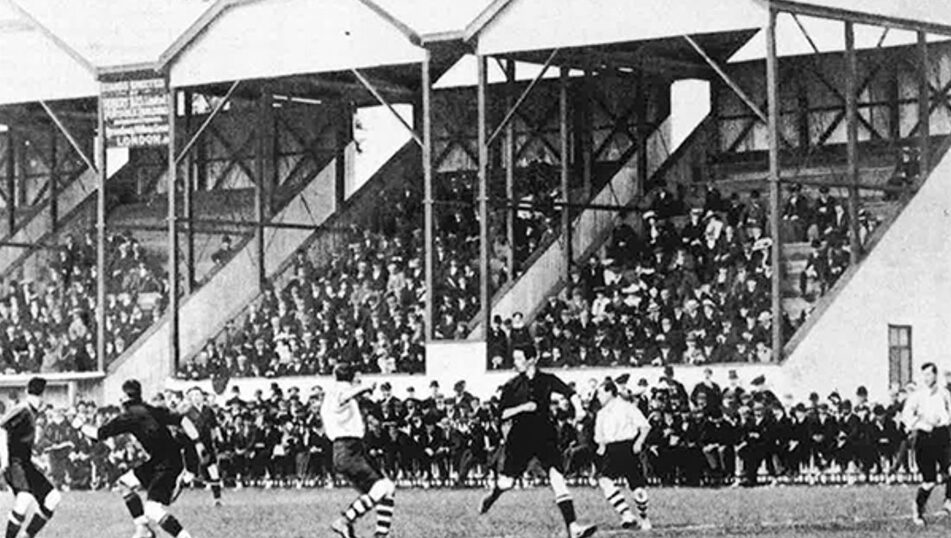
Craven Cottage became the perfect place for the club, situated along the banks of the River Thames in West London, and it could be the home of Fulham for more than a hundred years. The old charm of this ground, developing a different and captivating atmosphere on match days.
At this time, the popularity of the club grew, and Fulham began to establish itself as a giant in local football. Fulham FC started to get involved in various regional competitions, such as the West London Amateur Cup, which they won three times in the 19th century. Another competition was the London Challenge Cup, which helped the club build a strong reputation in West London. The team won the London Challenge Cup three times in its entire history.
During this time, the club adopted a new method and started to recruit some of the best players in the region of London, which increased the club’s appearances in competitions. By the turn of the century, Fulham FC was becoming a very popular and respected club in London, but it needed much more to achieve national success.
Pre-World War I and Between the Wars (1900 – 1940)
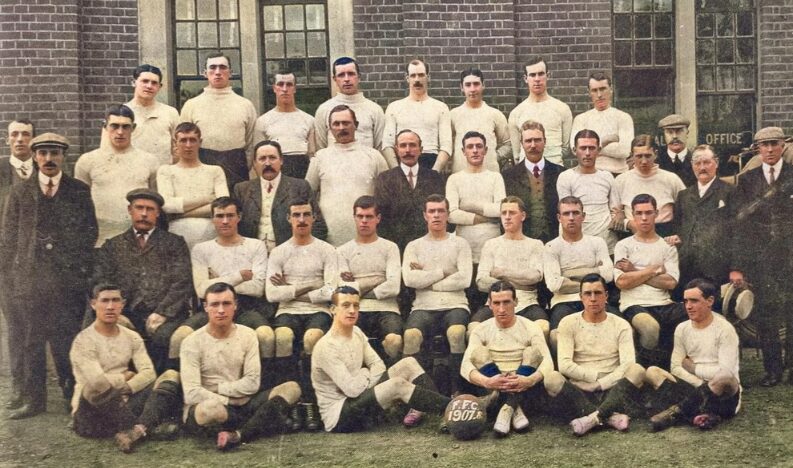
The dawn of the new century ushered in a period of growth for Fulham Football Club. A significant milestone was reached in 1907 when Fulham became a founding member of the Football League’s Division Two. This marked a turning point for the club as it transitioned from a local team to a competitor on the national stage, where it would face stronger opposition and test its mettle against more established clubs.
During this early period in the Football League, Fulham showed a lot of determination and why it would soon become a more competitive team. Although they didn’t reach the promotion to the top division at the time, the club showed potential and ability with its new talented players that they signed.
Fulham Palace, as the club’s stadium is also known, proved to its fans that the stadium was a competitive venue for important matches, with fans continuing to fill the stands and vibrate with the team’s game.
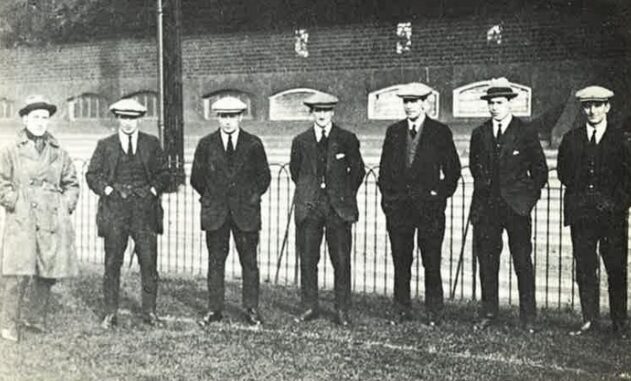
Although the 1920s was a decade of relative success for Fulham, as the team’s reputation and attractive style of play grew, the club was unable to achieve promotion to the top tier of English football.
The club experienced both highs and lows during their time in Division Two, with moments of brilliant football alongside disappointments. Despite the acquisition of talented local players who would become club legends, inconsistent performances continued to plague the team. The inability to secure promotion to the First Division remained a source of frustration, yet there were clear signs that the club was on the cusp of a successful future.
In the 1930s, Fulham experienced one of their biggest relegations in its history, falling from Division Two into the lower divisions between World War I and World War II. The team struggled during this hard period, facing financial problems and a lack of success on the field. Despite these issues, the club started to develop and become a competitive team in the future, and soon built a solid reputation for future progress.
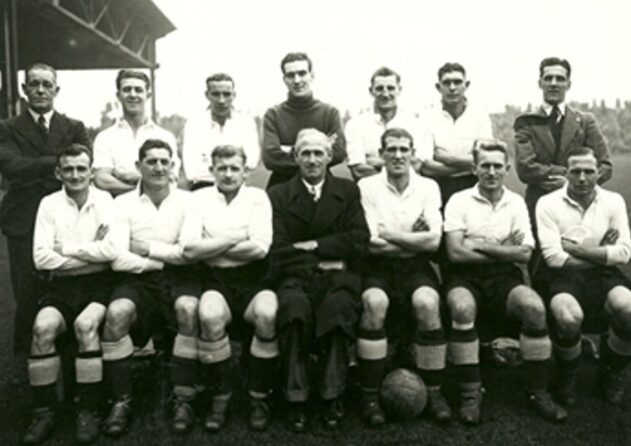
The reassembles post World War II saw Fulham in a difficult position. Like many other clubs in England and Europe, they faced challenges of adapting to the changing world. Since the war stopped the national competitions, the teams had to start participating in local and regional championships to not go bankrupt.
The war brought a temporary halt to football and led to the enlistment of many Fulham players, mirroring the situation in other European clubs. Despite the disruption caused by the war, this period underscored the unwavering support of the fans for their team, regardless of the club’s performance or the league in which they played.
While World War I started the problems of the club, making the team’s position less stable in England, the support of its fans remained intact. The years of World War II continued with problems for the club, but it was a period marked by rebuilding and the team re-establishing itself as a great team in the country. Fulham managed to get back up with a lot of determination to compete at the highest level again. This rebuilding marked the beginning of a new chapter in the history of the club.
Post-War Era and Rise Through the Leagues (1950s – 1970s)
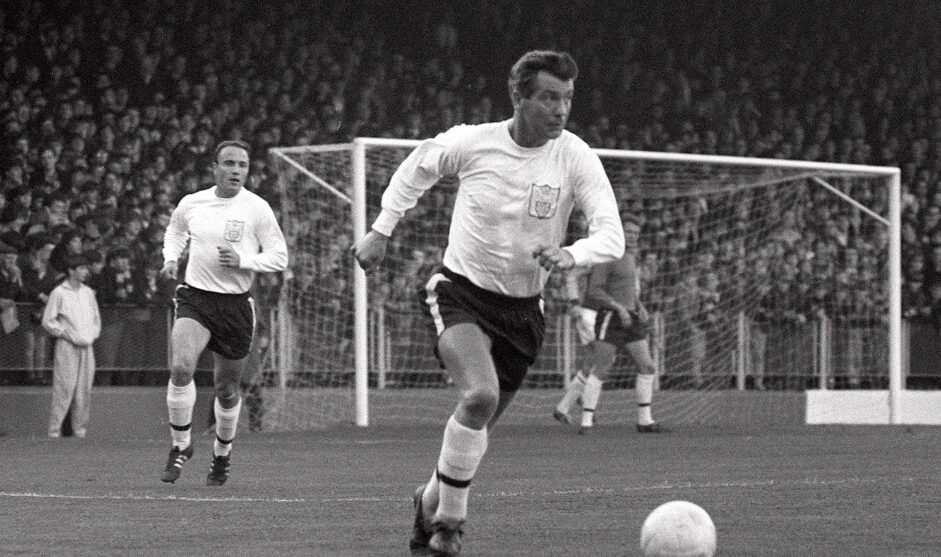
After the end of World War II, football clubs across England faced challenges and the need to rebuild and restructure their teams. Fulham FC wasn’t an exception since the war’s impact was significant, but the club began the post-war years with a lot of hope and determination to regain its position among the greatest clubs in the Football League.
The 1950s marked a new chapter in the club’s history, with the club reaching higher divisions and establishing itself in the top flight and professional status again. In the early 1950s, Fulham was in Division Two, where they had been for many years. However, the club had a large advantage over many clubs. The club had strong support in London, which allowed the club to attract some talented players to improve their squad.
One of the most important steps in these years was when the club signed Bedford Jezzard as Fulham’s head coach in the mid-1950s. Under Jezzard, the club built a competitive team that showed potential for promotion to the higher divisions.
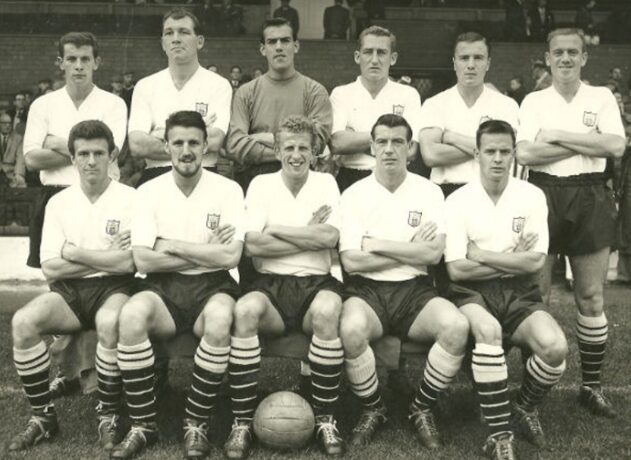
In the late 1950s and early 1960s, Fulham’s performance began to improve. The club was promoted to the First Division, the elite of English football, after some years of battles in the Second Division. This achievement was important for the club and its history, showing the rise of Fulham from the lower divisions to higher flights in England.
The 1960s brought a period of success for Fulham, as the club finally competed against the biggest names in English football and earned respect on the national stage. The team was blessed with talented players, including Johnny Haynes, who played almost 600 games for Fulham and scored more than 140 goals.
Known as “The Maestro,” Haynes was an influential midfielder and a crucial player for both Fulham and the English national team throughout the 1950s and 1960s. He played 56 games for England, scoring 18 goals, and represented his country in the 1958 FIFA World Cup.
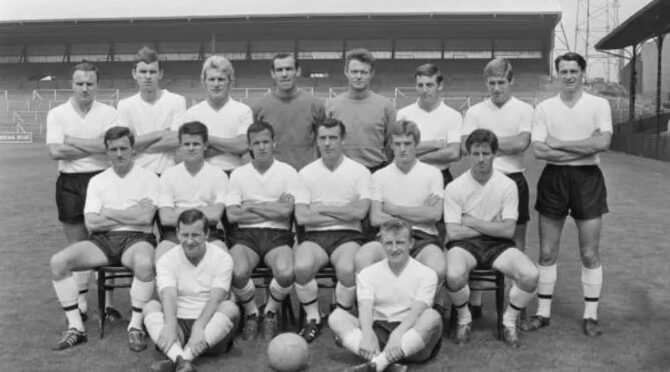
Alongside Haynes, other key players in the rise of Fulham were important, including Vic Buckingham, a manager who helped the club to become stronger, and Bobby Robson, a former English footballer, who played over 340 games with Fulham, enabling the team to compete against the best teams in England.
Fulham began to make appearances in international football during the 1960s through friendly competitions against European giants, including the Anglo-Italian Cup and the Anglo-Scottish Cup. While the club didn’t secure any trophies in these competitions, this era solidified Craven Cottage’s reputation as a formidable fortress and a traditional English football ground with the addition of new stands, the Hammersmith End and the Stevenage Road Stand.
The 1960s were successful for Fulham, but the team was relegated to the Second Division again in the 1967/68 season. The club’s inconsistent performance throughout the 1970s as it restructured to attempt promotion back to the First Division led to a loss of credibility.
The early 1970s continued with huge rivalries with other West London clubs, such as Queens Park Rangers, which kept the local football scene alive.
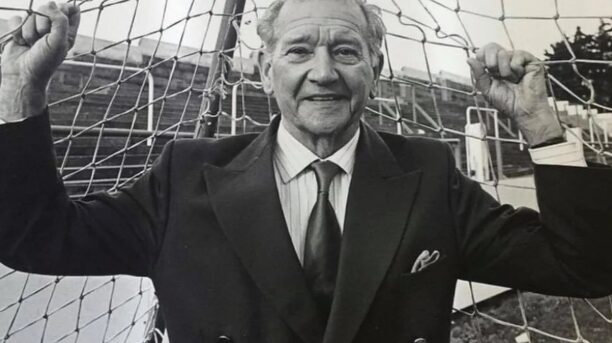
One of the most significant developments in these years was the influence of important managers, including Alec Stock and Bobby Robson, who brought new ideas and tactics to the club. Under Stock, the club once again earned promotion to the First Division in 1975, proving that the club, with a lot of determination, could be capable of competing at the highest level in English football.
The 1970s also saw the club developing its style and tactics. The club did not reach any trophy during these years, but remained as a respected club in English football. Their promotion to the Division One, known as second division in England, with beautiful performances in domestic competitions, made the club become an attractive team to watch.
One of the club’s most successful seasons was in 1975, when they reached the FA Cup final for the first and only time. They played against West Ham United at Wembley Stadium in London but lost 2-0.
These decades of post-war represented a period of transformations and rebuilding for Fulham FC. The club began its rise through the leagues, developing star players, such as Johnny Haynes, and important coaches like Bedford Jezzard and Alec Stock.
After this period, the club began a new chapter in its history, becoming a key football club in England, and establishing for future growth and development.
Financial Struggles and Rebuilding (1980s and 1990s)
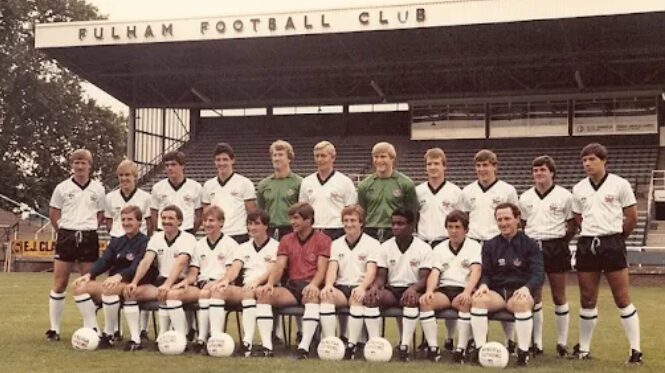
The 1980s were a turbulent time for Fulham FC, both on and off the pitch. While the club enjoyed some success in its early years in London, the 1980s was a period of decline. Some financial problems began to appear, and these troubles influenced the field performances. Once again, now in 1982, the club faced another relegation to the Second Division, known as the EFL Championship in English football.
Financial troubles and poor on-field performance led to Fulham’s relegation to the Third Division in 1986. This was the club’s second relegation, and it came as no surprise given their mounting debts and persistent financial issues.
During this time, the club went through several ownership changes, making the club go through many difficulties to remain a professional football team. The infrastructure of the club also suffered, with the Craven Cottage becoming outdated and in need of major renovations to serve its fans.
Fulham’s fans began to worry about the club’s future, and the relegation seemed to be the least of the problems in the 1980s.
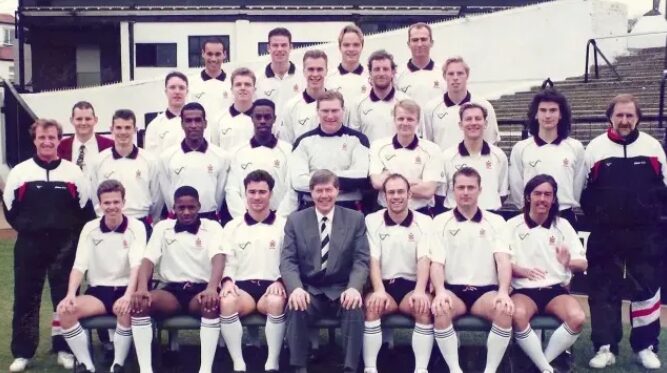
Despite these problems, the late 1980s and early 1990s, it was a moment of hope for Fulham, with a long recovery journey. In 1991, the club appointed Donald Mackay as manager, a former Scottish goalkeeper. With him, the results were not showing, so he was fired, and without Mackay, the club sank even more, being relegated to the Fourth Division.
Ray Wilkins’ arrival as coach brought relief to the fans, as he led the club out of the Fourth Division in 1997 and secured promotion to the Third Division of English football.
The 1990s were a decade of slow but steady progress. Fulham began step by step to rise in division with back to back promotions, re-establishing itself as a team of greater expression in the country. The club also returned to investing in the infrastructure of its stadium, something that was precarious in the past decades. So, the financial problems were far from being solved.
Fortunately, a significant transformation occurred soon after. The Mohamed Al-Fayed era commenced in the summer of 1997. The Egyptian’s arrival as club owner ushered in an era of prosperity, both financially and on the field, marked by exceptional performances.
Fulham won a new life, and with the Egyptian in charge, he would put the club in its proper place, among the best teams in England and in search of the Premier League years.
The Al-Fayed Era and Premier League Ascent (1997 – 2010)
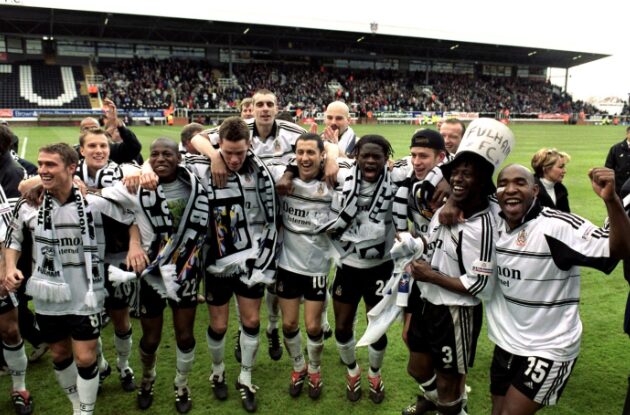
In 1997, Mohamed Al-Fayed bought Fulham for over 6 million pounds. The Egyptian promised that the club would reach the Premier League in a maximum of 5 years. Al-Fayed took over the club at a time when Fulham were still rebuilding after years of financial instability and problems with relegation.
Only the intervention of these investments were a breath of fresh air for the club, since a financial contribution was necessary to restructure the club, both on and off the field. His first moves were to reform the stadium and modernize it, but maintain its old architecture, with all its historic charm. In addition to the Cottage Craven, he made managerial changes and hired new players for Fulham.
Under Al-Fayed’s leadership, the club began improving their squad and performances on the field. The promise made in 1997, was reached in 2001, when they won promotion to the Premier League, securing their place in the elite of English football for the first time in over 30 years. Fulham won the EFL Championship, without the need to play the championship play off final, with 101 points out of a possible 138, unbelievable!
His investment in new players and modernized facilities allowed Fulham to compete against top English football clubs like Manchester City, Newcastle United, Aston Villa, and Stoke City. As league champions, Fulham had high aspirations for the future.
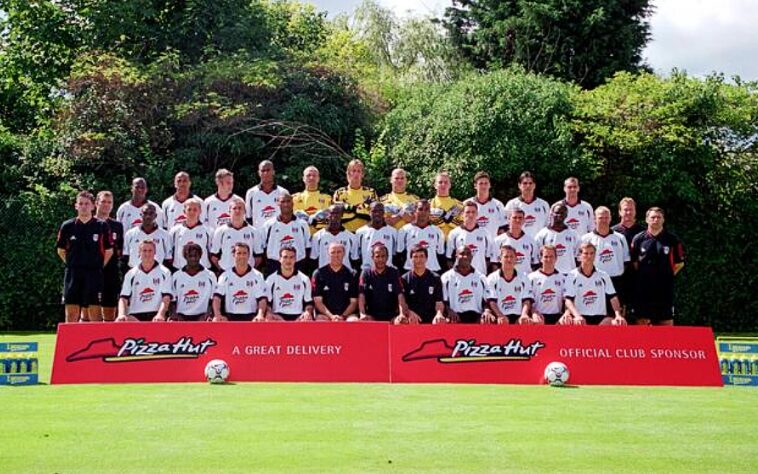
Once in the Premier League, the early years of Fulham were characterized by stability and slow growth. The debut of Fulham in the Premier League in 2001 was a period of consolidation, with Jean Tigana as manager. Tigana was the manager of the club for 3 years, starting a successful journey for Fulham. The club finished the 2001/02 season in 13th place.
After Tigana left the club, Chris Coleman replaced his position in 2003, and the Welsh manager continued the trajectory of success. Under Coleman, in his first season, Fulham achieved a surprising 9th place in the Premier League. The club, finally, became known for its great performances. Even if it still couldn’t compete for the first positions, the club was always in the middle of the table with very consistent campaigns.
In 2009, under Roy Hodgson, an English manager, the club reached one of its most successful campaigns. Fulham reached the seventh place in the Premier League and qualified for the UEFA Europa League. With an incredible campaign, the club reached the final for the first time in its history.
It was a glorious moment for Al-Fayed after acquiring the club in 1997. Even if the club lost the final to Atletico Madrid, Fulham was becoming a respected team in the Premier League and soon, dreams would come true.
Europa League Dream (2009/10 Season)
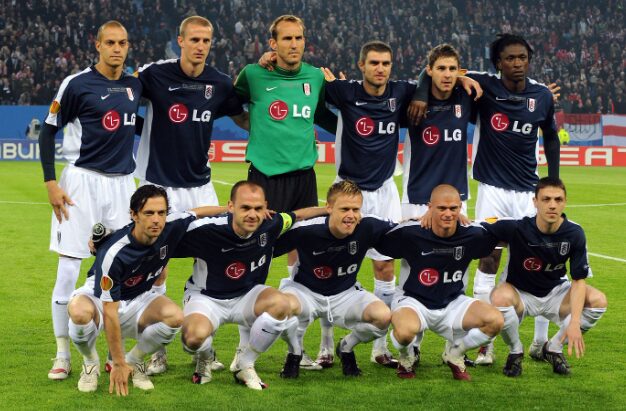
The 2009/10 season was a remarkable chapter in the club’s history. Under Roy Hodgson, the club participated in an unforgettable journey in the UEFA Europa League, the first final of its history in this championship.
Their journey began in the early rounds, where they defeated teams from across Europe, such as AS Roma, Basel and CSKA Sofia. The club conquered second place in the group stage, achieving a place in the Knockout Phase. In the knockout stage, the club faced multiple hard opponents.
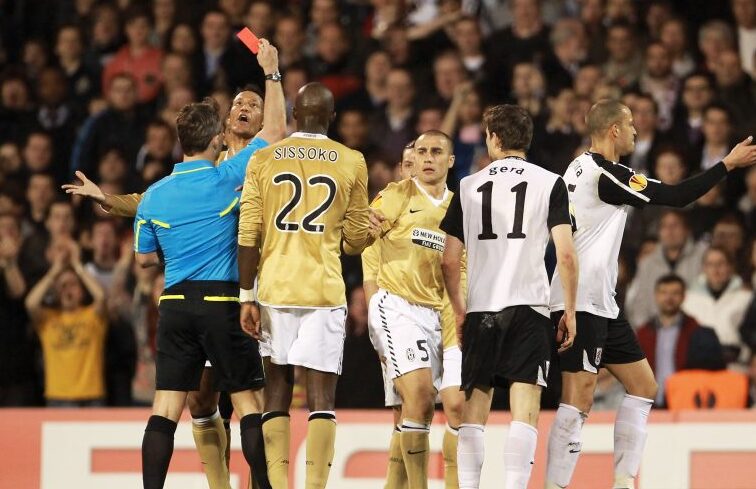
In the Round of 32, the club eliminated Shakhtar Donetsk by 3-2 in the aggregate score. After these games, the club progressed to the round of 16, where they eliminated the Italian giants Juventus by 5-4 in the aggregate score. Fulham returned to the second leg, and the club won 4-1 against Juventus, with a historic turn at Craven Cottage.
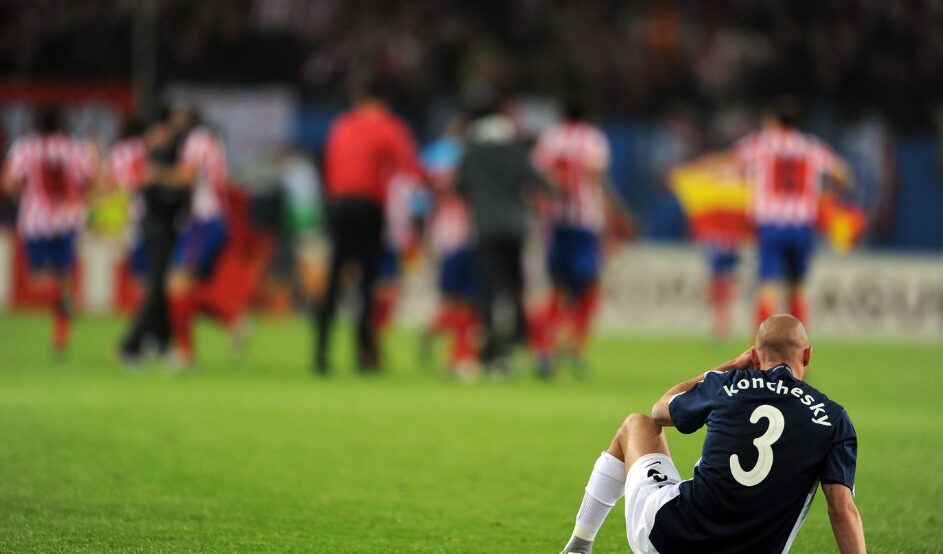
The final game of Fulham’s Europa League run was against Atletico Madrid at Hamburg’s HDI-Arena in May 2010. Fulham lost the match 2-1 in extra time after the game was tied 1-1 at the end of regulation. Davies scored Fulham’s lone goal, while Diego Forlán scored both goals for Atletico Madrid, securing the UEFA Europa League championship for the Spanish club.
Despite the loss, Fulham’s journey in the UEFA Europa League was significant and will always be remembered. Players like Clint Dempsey, Bobby Zamora, and Mark Schwarzer became club legends with their outstanding performances throughout the tournament. The team’s determination and unity serve as an example that anything is possible.
Fulham FC Stadium: Craven Cottage
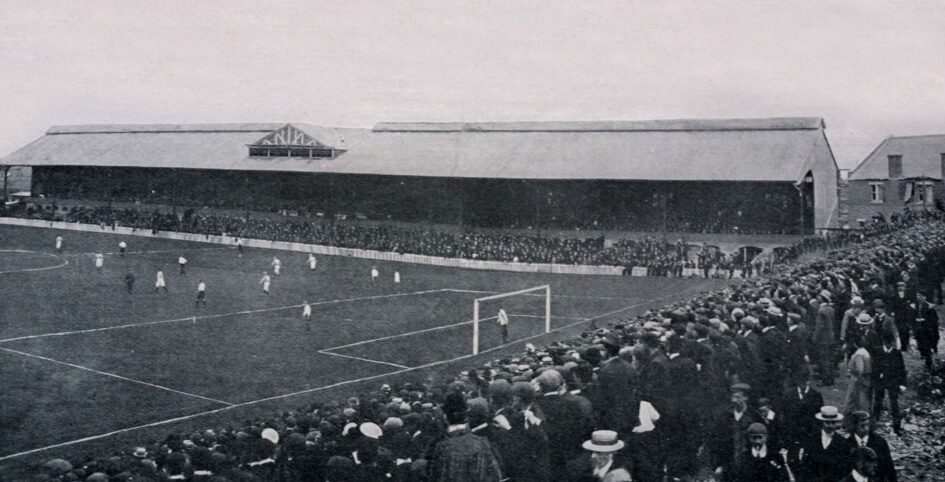
One of the oldest football stadiums in England, Craven Cottage is the home of Fulham FC for over a century, almost 150 years! Located in Fulham, West London, right on the banks of the River Thames, the Craven Cottage is part of the club’s history.
Come with me, and I’ll tell you everything about this amazing ground!
Origins and Early History
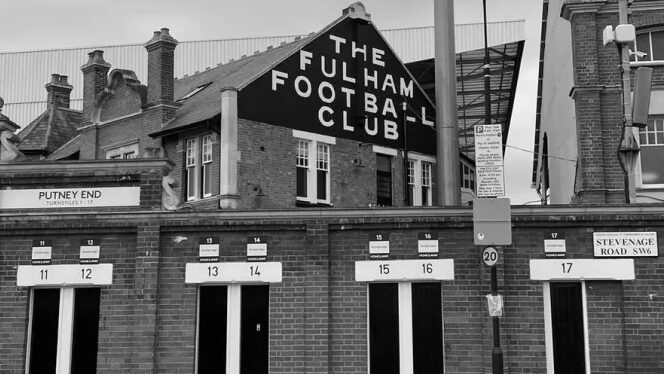
Craven Cottage was originally opened in 1879. Its name is derived from the Craven family, who once owned the land, and the “Cottage” part refers to the small house that was situated on the site before the construction of the stadium. Initially, the ground was used by multiple amateur teams, such as Royal Arsenal, but Fulham Football Club made Craven Cottage their home in 1896, and it’s remained so ever since.
The first grandstand at the stadium was constructed in 1905. Due to the club’s needs, new stands were built over the years to accommodate its growing fanbase. The stadium slowly evolved into a huge ground that could accommodate larger crowds to watch the Southern League and West London Amateur Cup.
From the beginning, the stadium has always followed all the team’s games, whether they were against local rivals or European battles, or whether they were in the relegation zone or the Premier League years. The first game of Fulham in the Second Division in the 1907/08 season was against Hull City, and the club lost 1-0.
Hammersmith End and the Riverside Stand

The architecture of Craven Cottage is striking, with a range of stands offering diverse views for fans. The most iconic of these is the Hammersmith End, located behind one of the goals. Known for housing the most passionate supporters, the Hammersmith End is considered by many to be the heart and soul of Craven Cottage. Another notable stand is the Riverside Stand, which runs alongside the River Thames and is known for its proximity to the water and scenic views.
Main Stand or Johnny Haynes Stand
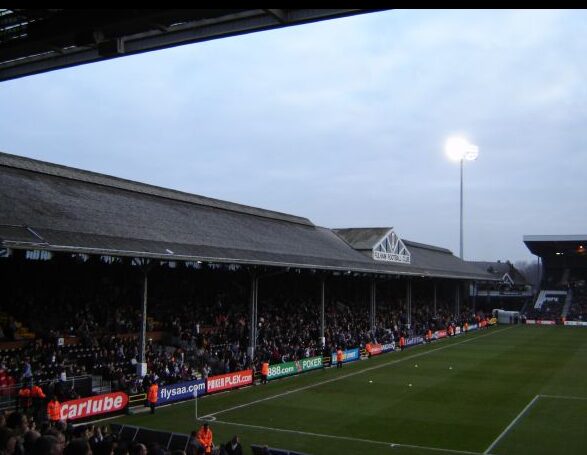
The Main Stand at Craven Cottage is another historic stadium stand. Built in the early 20th century, it is recognized for its traditional design. Over the years, it has undergone several changes and renovations.
The Main Stand was also where Johnny Haynes, the legendary captain of the team, led the club in the football league. Today, this stand holds a beautiful and great sentimental value for fans and supporters who remember the best years of the club to top-flight football.
Modern Upgrades and Future Plans

The recent renovations at Craven Cottage included upgrades to the Stevenage Road Stand, with more seating and improved amenities. The changes also enhanced the fan experience with new hospitality services, improved accessibility, and fan engagement areas.
In the future, a redevelopment of the Riverside Stand could increase the stadium’s capacity, currently almost 30,000, and provide fans with modern and comfortable seating.
Legends of Fulham Football Club
Several players have already passed through the club and left nostalgia for the most passionate fans. Now, I’ll show you some of the most important players ever wearing the Fulham jersey.
Johnny Haynes
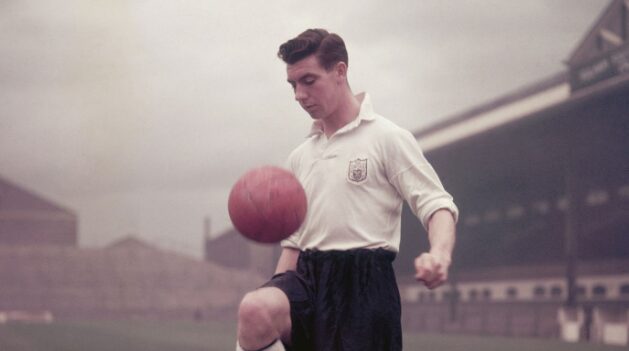
Johnny Haynes, a former England football player, played inside forward for Fulham F.C. and scored 146 goals during his career. Haynes was dedicated to Fulham, playing almost his entire career with the team and participating in 596 games.
Haynes, who suffered a brain hemorrhage after a car accident, passed away on his 71st birthday in 2005.
Louis Saha
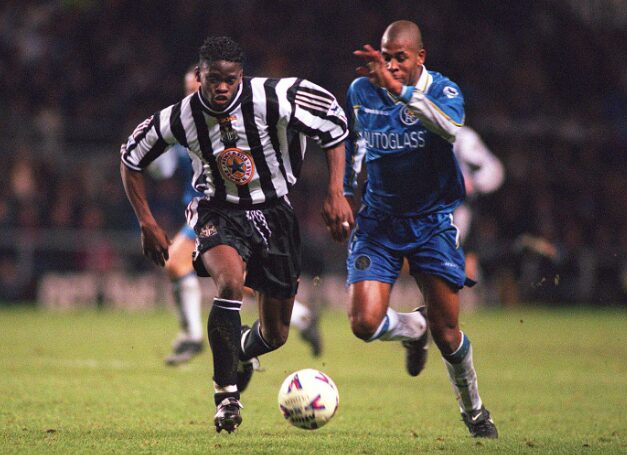
Louis Saha was a former French football player. Saha was one of the most important players for Fulham in the Premier League. He played 6 years for the club, with almost 130 appearances and scoring 54 goals.
Saha retired in 2013 after spending six months at Lazio, an Italian club. He then opened AxisStars, a company to develop professional athletes.
Clint Dempsey
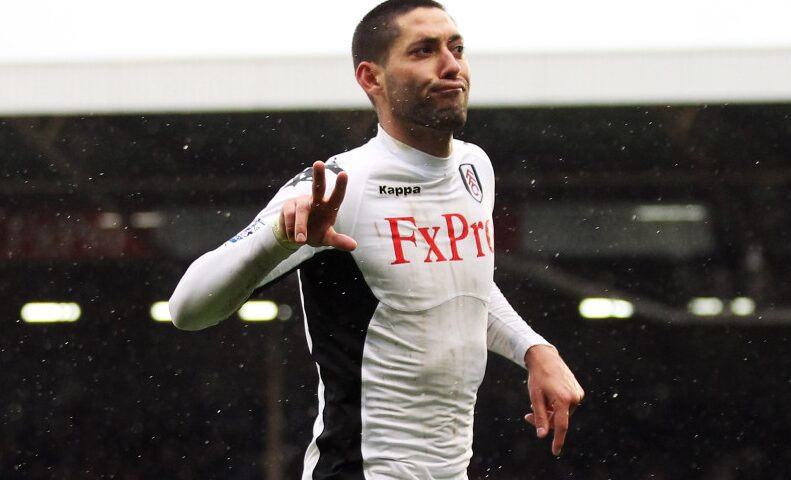
Clint Dempsey, a former American soccer player, spent over 6 years of his career with Fulham Football Club, appearing in nearly 200 games and scoring 50 goals. He then returned to the United States to finish his career with the Seattle Sounders, where he played 115 matches before announcing his retirement in August 2018.
Dimitar Berbatov
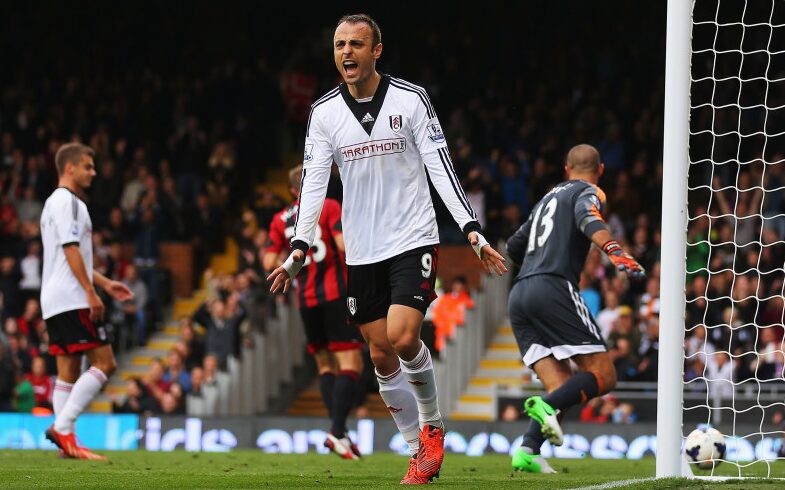
Dimitar Berbatov, a former Bulgarian striker, enjoyed a successful stint at Manchester United before joining Fulham. During his time at Fulham, Berbatov scored 19 goals in 51 appearances.
He played for the Indian football club Kerala Blasters before retiring. After leaving the Indian club, he was without a team for a year and a half, so he decided to retire in September 2019.
A Journey Beyond the Pitch

The story of Fulham Football Club isn’t about only goals scored or trophies won. It’s a beautiful narrative through time, with passion, union, challenges, and triumphs. They knew what it meant to fall, but they showed the world of football what it takes to rise again, stronger than before.
Looking ahead, it was worth all these twists and turns of life that the club went through. Fulham Football Club suffered a lot in its star road, but also had great achievements. Being champions just one point ahead of its opponent or winning almost every game of the season, Fulham still has a lot to conquer.
In the end, the journey will always matter more than the destination, and for Fulham, every step taken has been one worth remembering.
Overcome All Challenges with FootballTeam

If you’ve made it this far, chances are you’re a big football fan, right?
If you’re passionate about football and want to be the best player ever, I have good news: FootballTeam is the perfect game for you!
This game is your gateway to show off your football knowledge while building your dream team or stadium. Challenge friends and players globally in an immersive football experience like no other!
FootballTeam is available on desktop and mobile devices, ensuring a seamless experience wherever you are. Sign up now and play for free!


